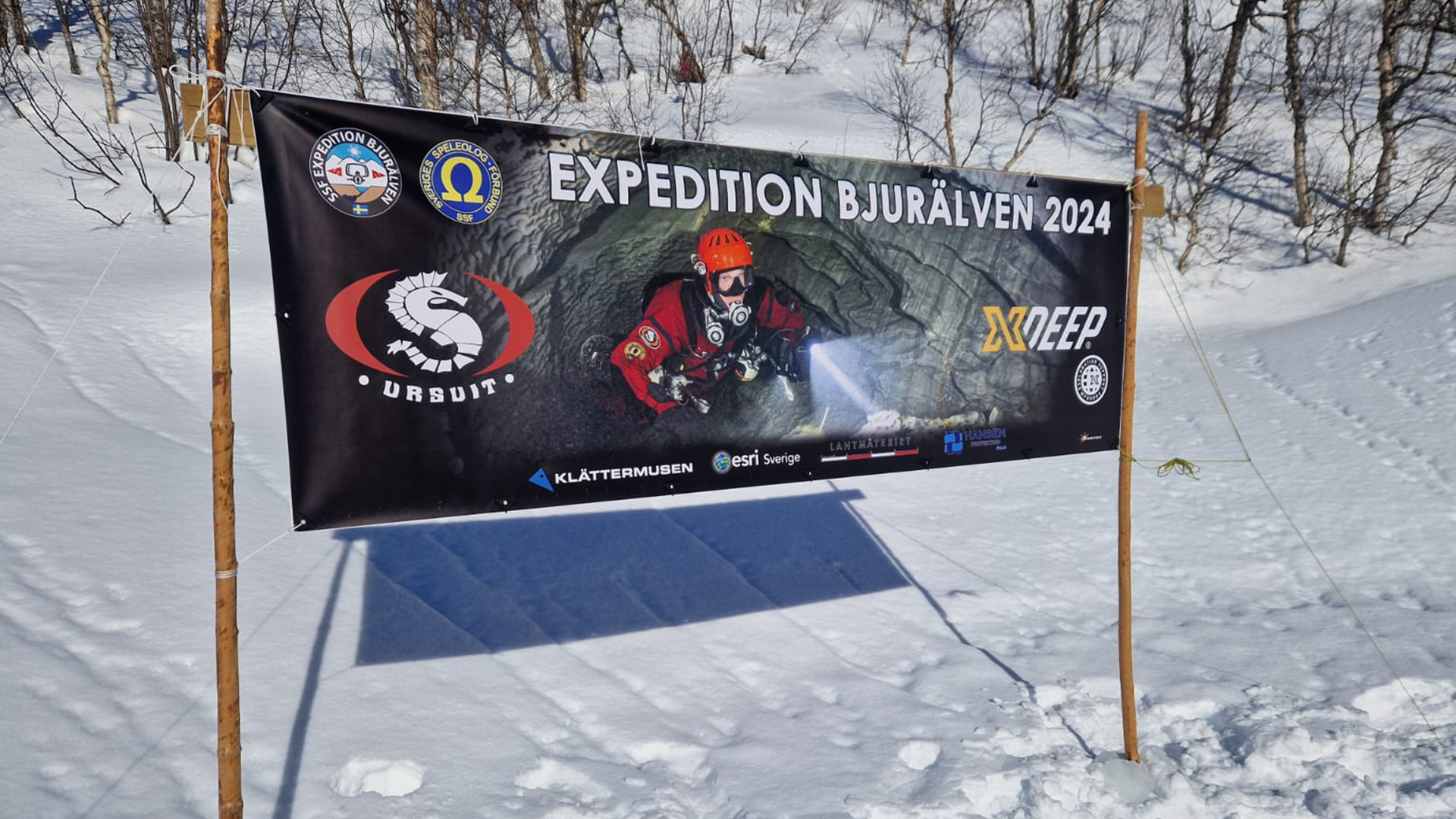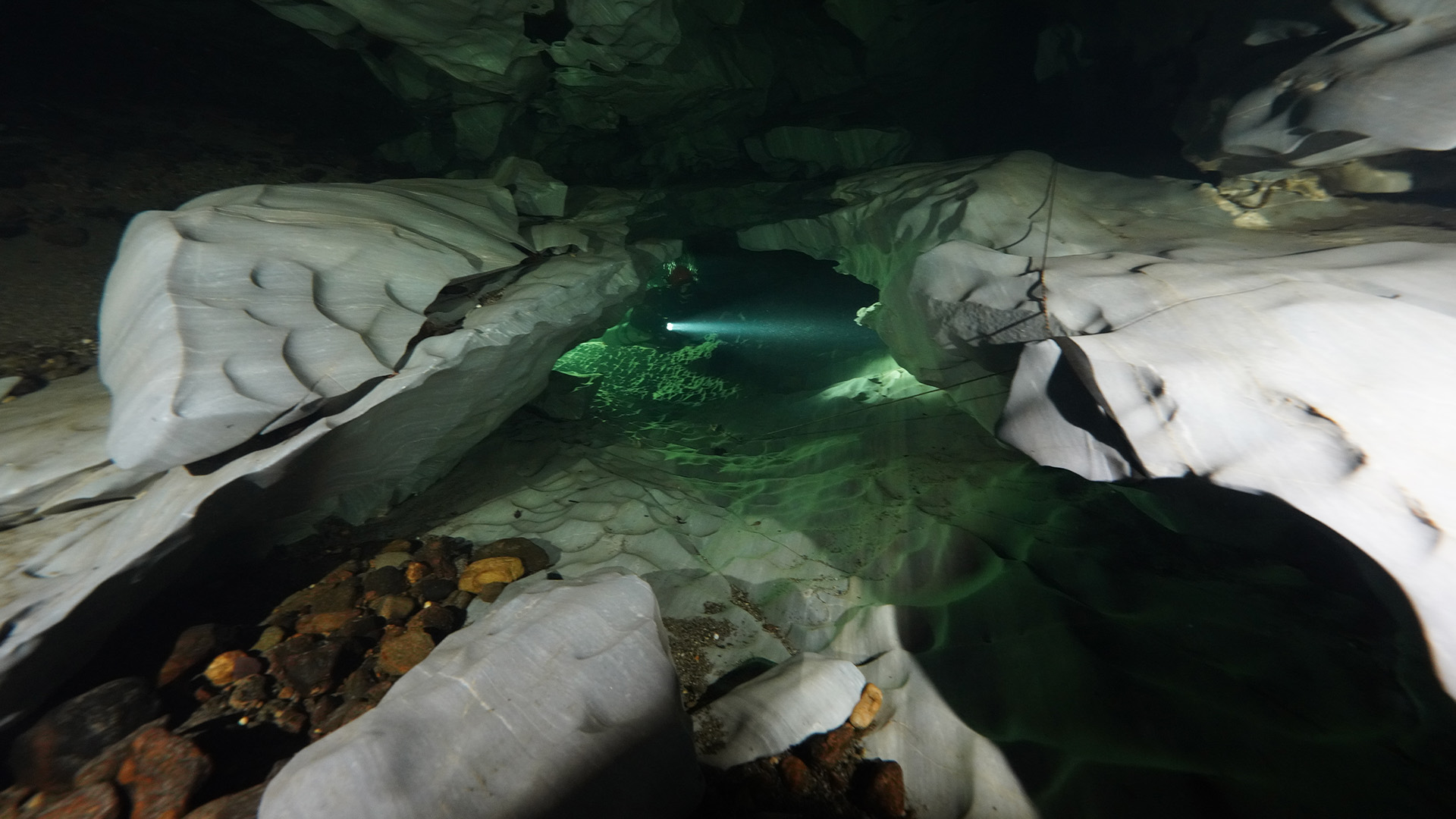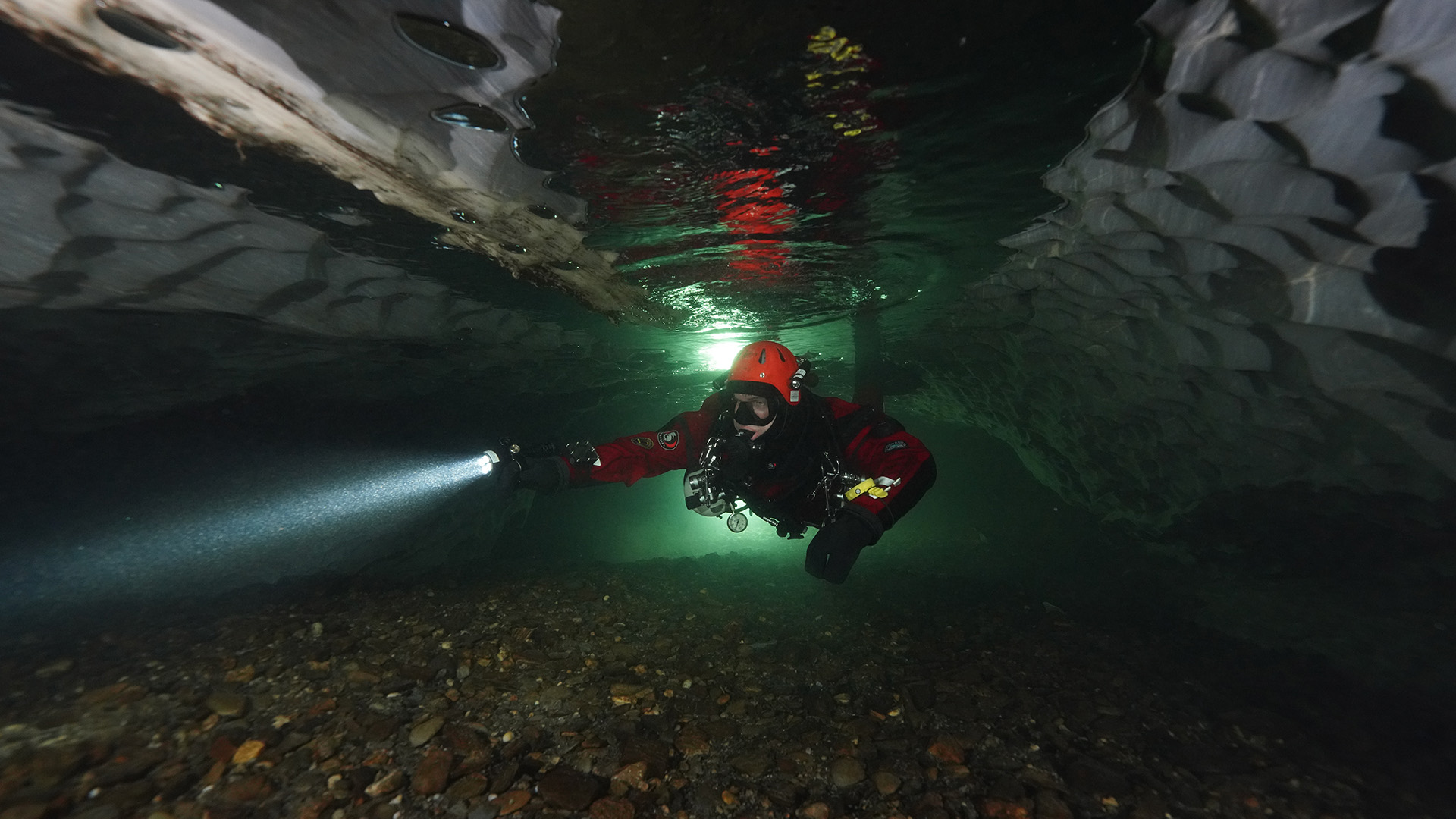

The exploration of Sweden's most extended flooded cave system, Dolinsjögrottan, located in the Bjurälven valley, has been ongoing since 2007. Although Bo Lenander discovered the entrance to Dolinsjö cave in 1979, the very high water flow in summer, making diving in the cave feasible only in winter conditions, meant that exploration of the cave only began 28 years later. Expeditions from 2007 to 2022 allowed the discovery of over two kilometers of corridors in this longest flooded cave in Sweden, increasing the total length of all caves discovered in the valley to 3353 meters. The 2024 expedition aimed to explore two caves in the Bjurälven Valley: Meander Cave and Dolinsjö Cave. Diving in the Dolinsjö Cave proved difficult due to extreme amounts of ice blocking the cave entrance. However, the team managed to put divers into the water, and one team reached the end of the line during a 6-hour dive. Meander cave is much shorter but poses a different challenge – extreme water flow and tight restrictions. A compressor-driven suction hose was used to remove some of the sand from the restriction, which blocked the way further into this cave.
Diving in Meander Cave
During the expedition, a dive team of four people visited the Meander cave on Monday and Tuesday. The goal was to see if it would be possible to negotiate "the sandstorm restriction" as this cave is expected to be connected to the Festins cave. To dive In the Meander cave, the water flow has to be low. Otherwise, it is not possible to enter the cave. A "meander" is one of a series of regular sinuous curves in the channel of a river or other watercourse, and since this cave consists of several tight curves, it got this name. The water conditions were favorable in 2024.
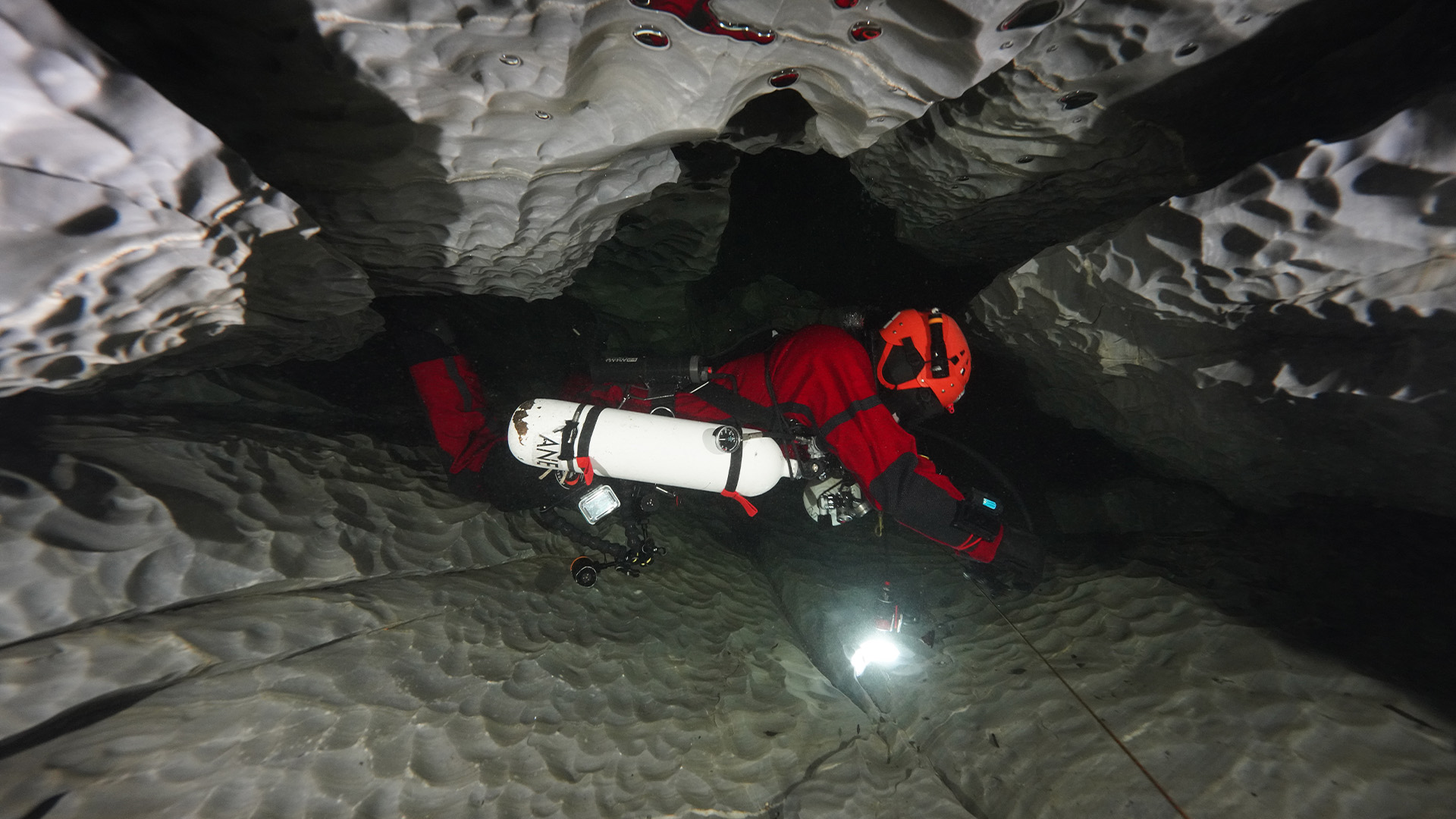
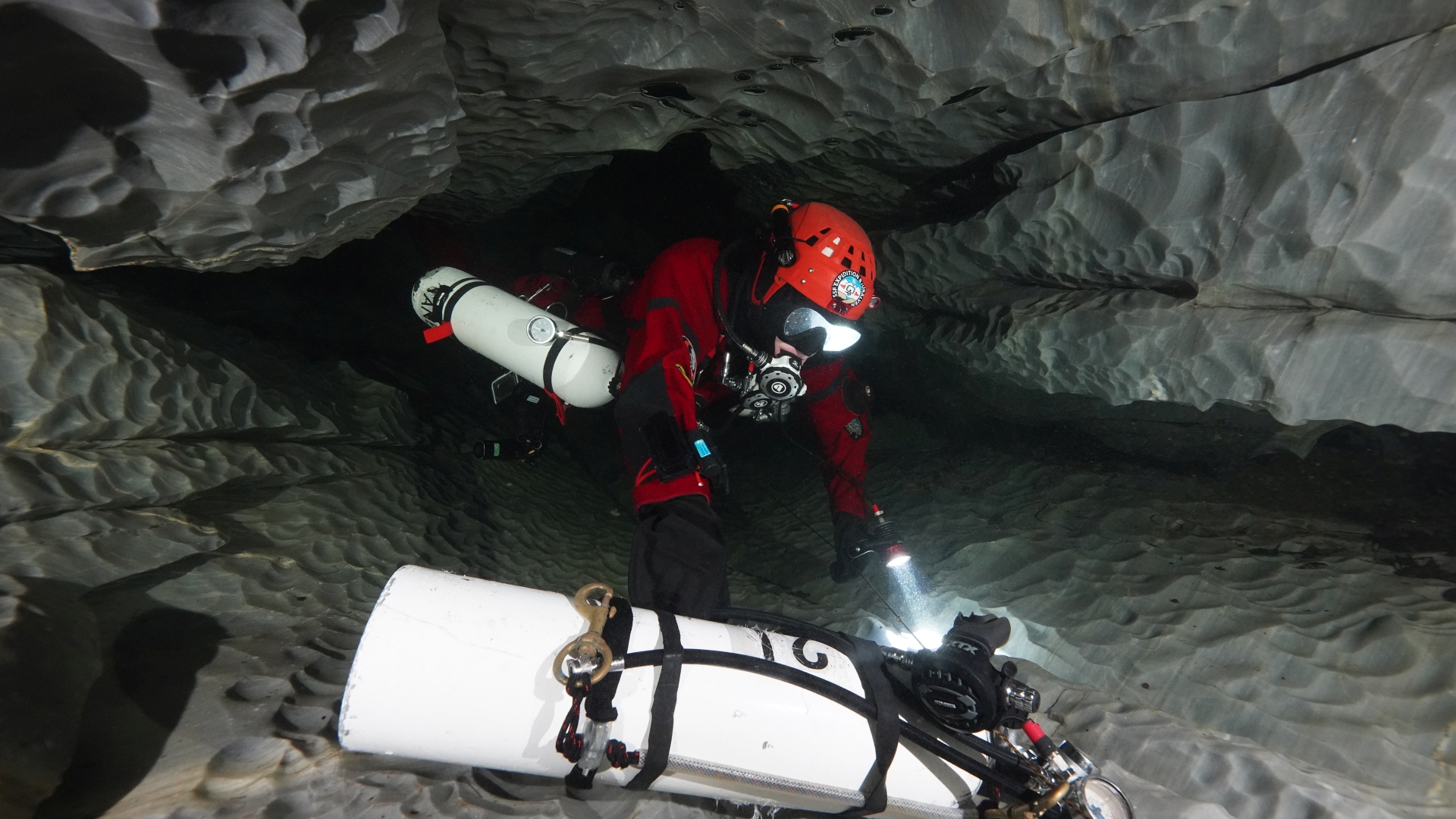
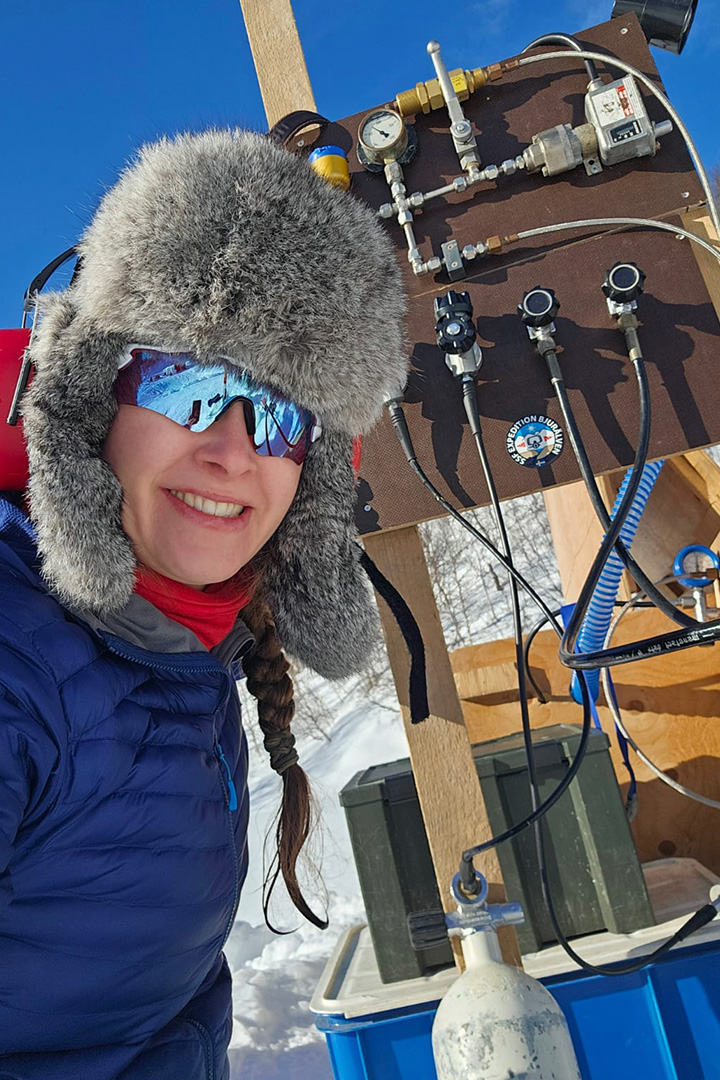
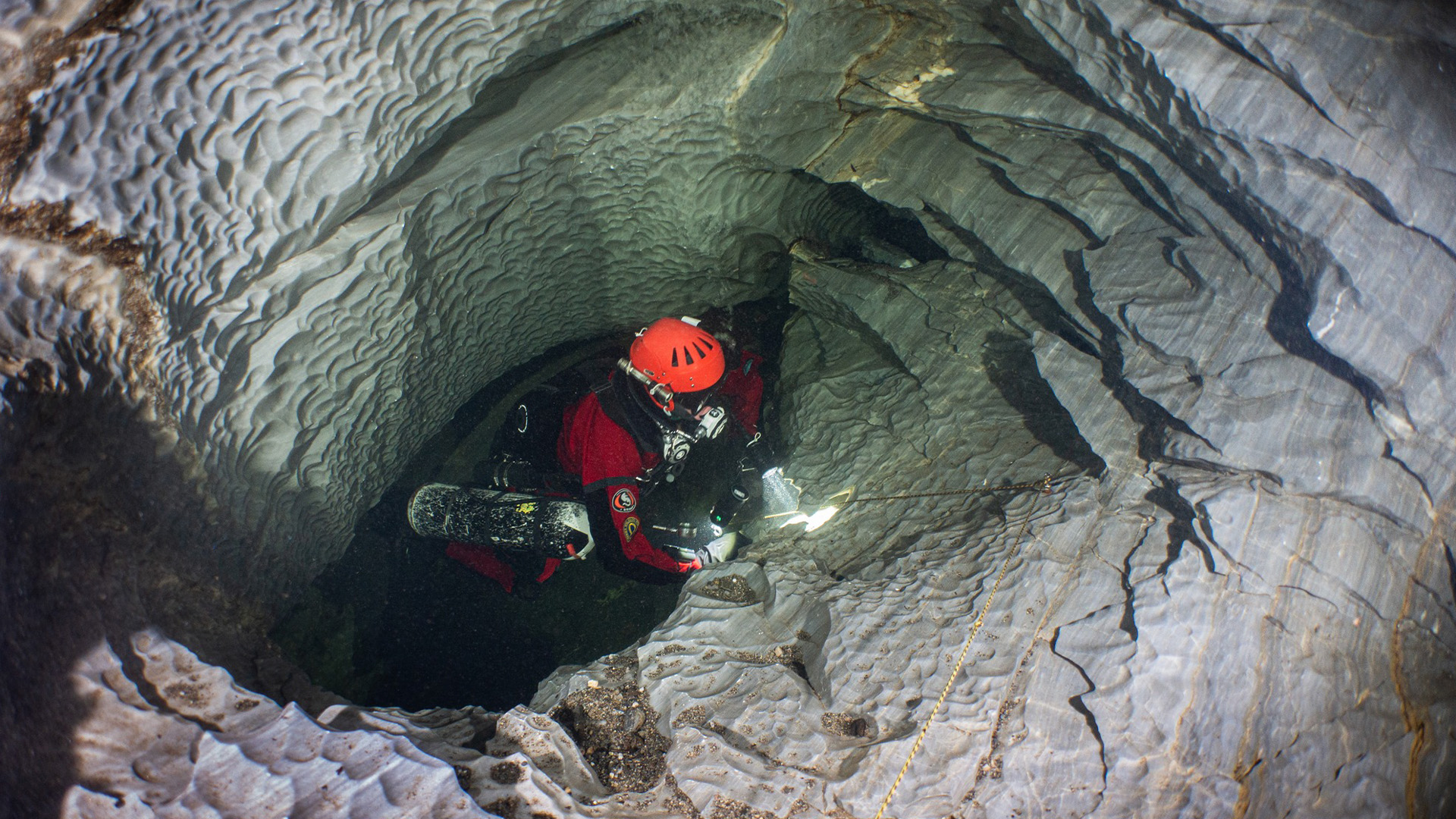
The cave starts with a beautiful horizontal marble pressure tunnel lasting about 12 meters and ending in a vertical shaft. At the end of this shaft, there is a sandy bottom, and you'll find yourself facing a tornado of sand. This part of the cave has been dived several times previously, but the restriction has been negotiated before. After a short video-dive, a "sand suction kit", consisting of an air hose and a water pipe, was brought in. A low-pressure air compressor outside of the cave was powering the suction kit. This setup allows the removal of the sand much quicker than manual digging. In the beginning, sand removal was quite efficient, but it was soon discovered that longer water pipes would be needed in the future to get through. However, enough sand and gravel were removed in order to get a GoPro camera on a selfie stick through the restriction. The captured video material is quite promising, as a more significant cave passage can be seen at the sandstorm's other side. Exploration of this cave will thus continue in the future.
Diving in Dolinsjö Cave
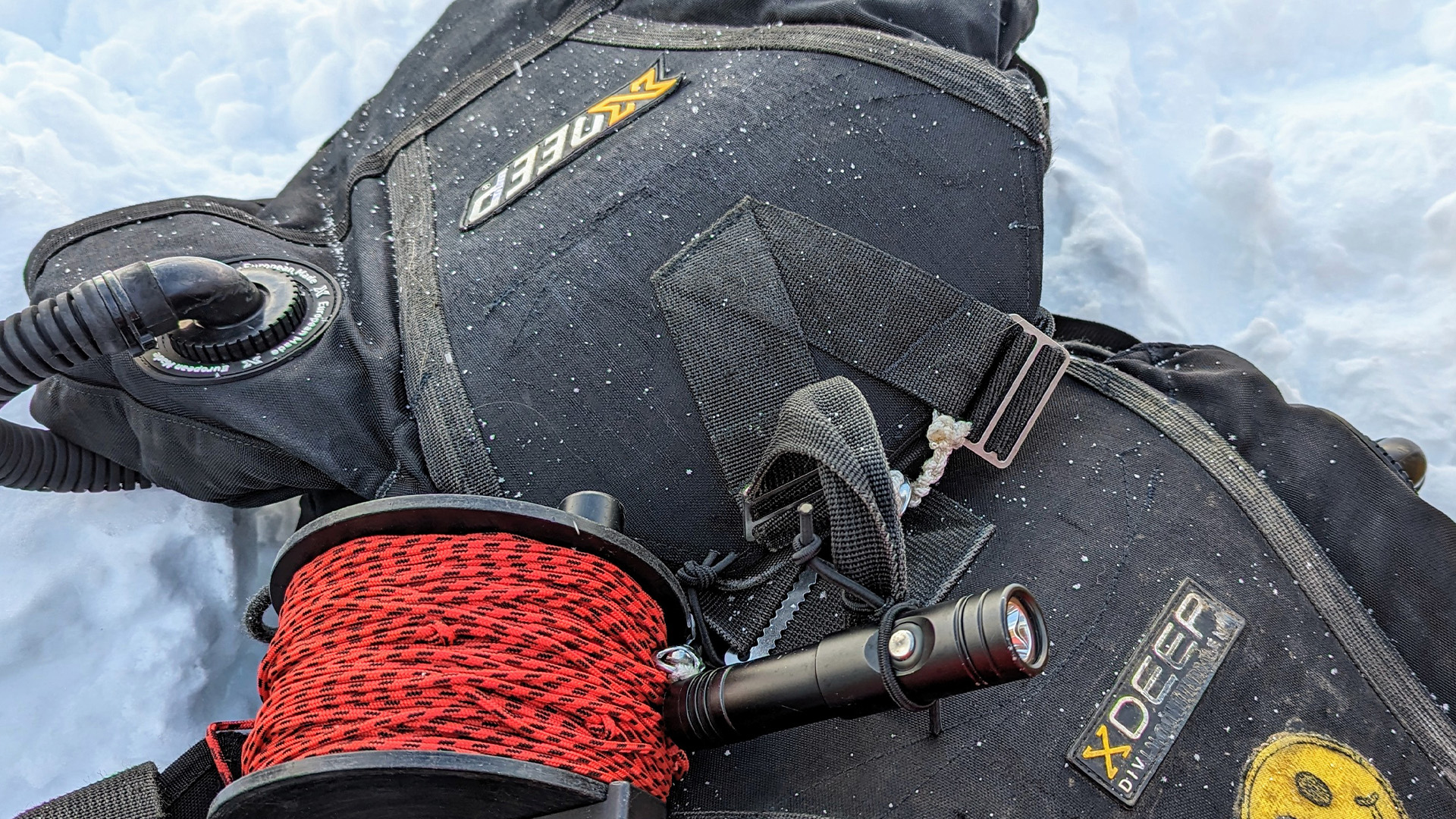
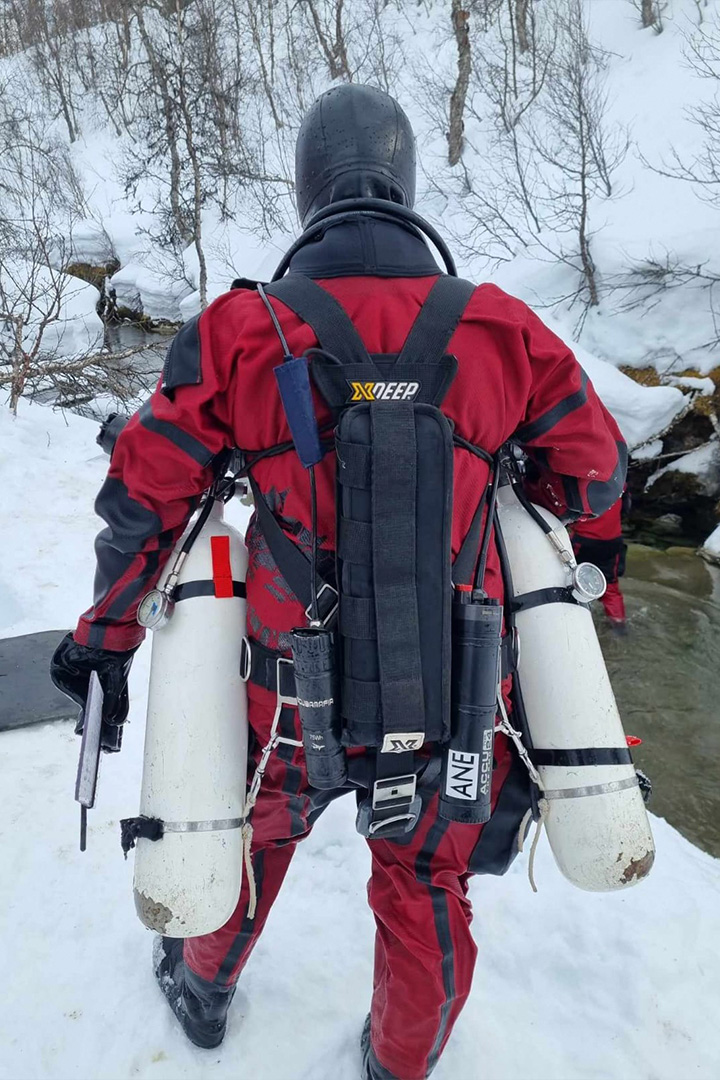
One of the goals of this year's expedition was to re-open the Dolinsjö cave. This is the longest cave in the Bjurälven area and the one where the original exploration started. The cave requires a sidemount configuration since divers need to negotiate several tight restrictions. However, some parts of the cave are relatively large, and several divers can swim shoulder-to-shoulder in the largest passages. Dolinsjö cave starts with a long sump (almost 500 meters), after which the first dry passage can be accessed. All in all, there are four dry passages and five sumps. There is no need for SRT climbing in the dry passages, but in some places, rope has been installed to assist in moving up to ledges and along slopes. Most of the dry passages are relatively stable, although the last chamber dubbed "Don't Touch That Rock" ("which one?" – "all of them!") contains a large number of loose boulders on the floor and some parts of the ceiling have been secured in place for the safety of the explorers. There are 2432 meters of surveyed passages in the Dolinsjö cave.
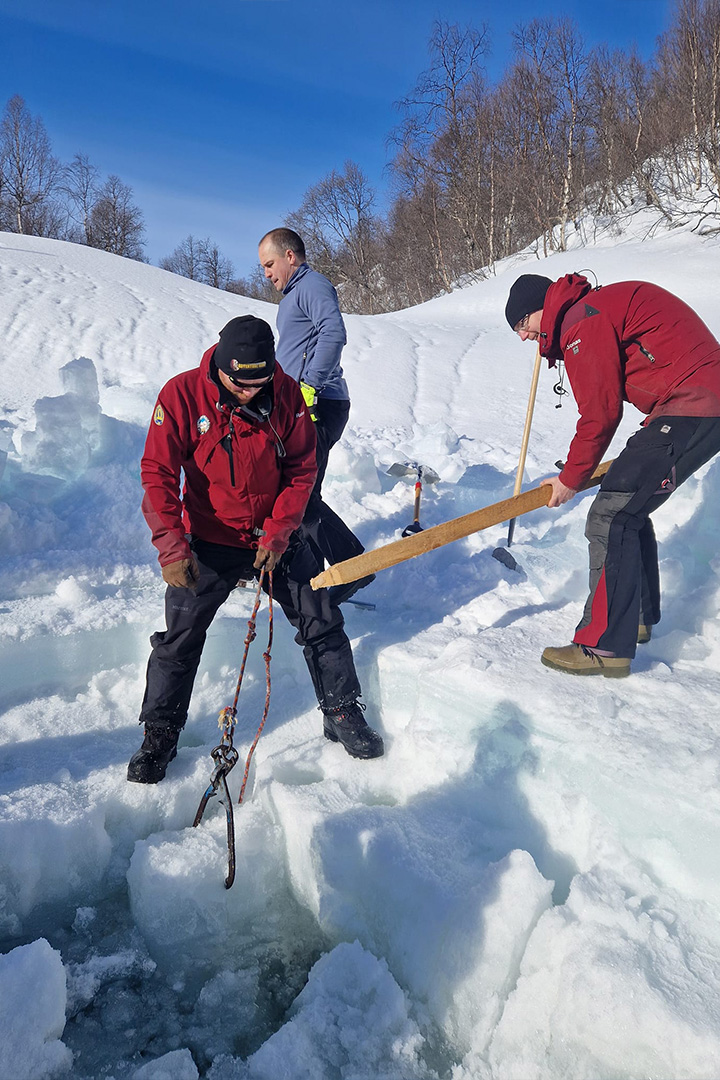
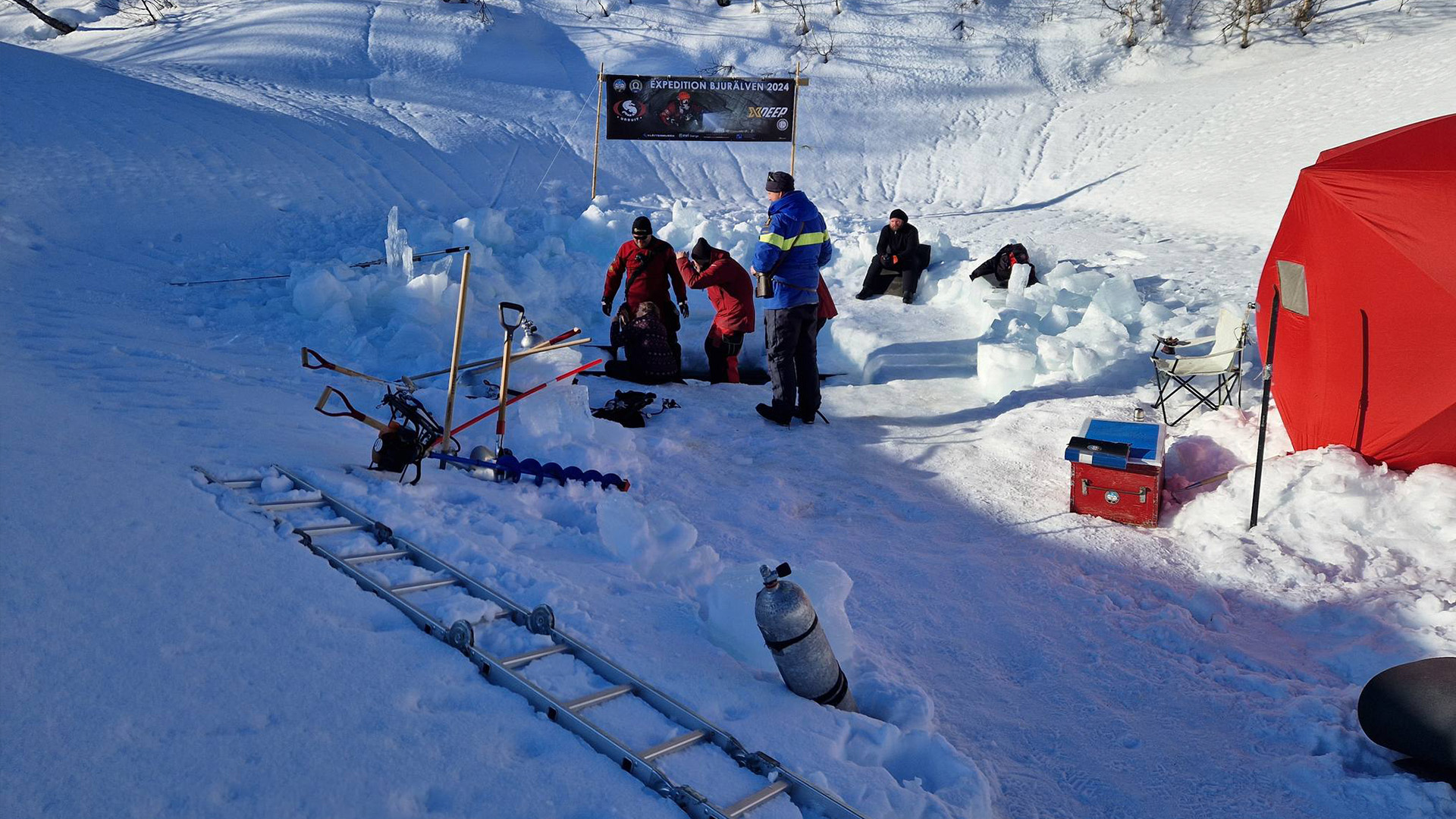
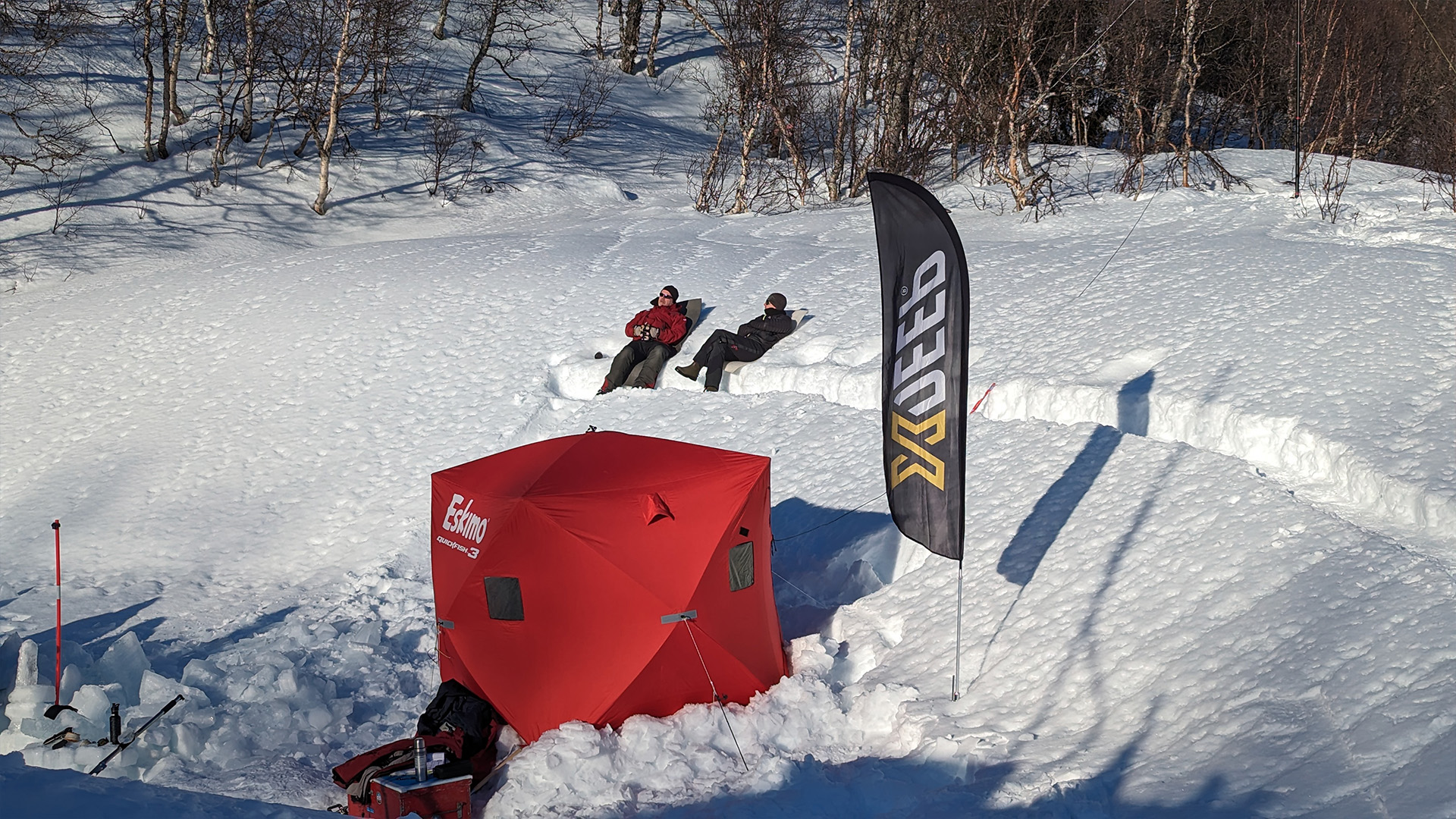
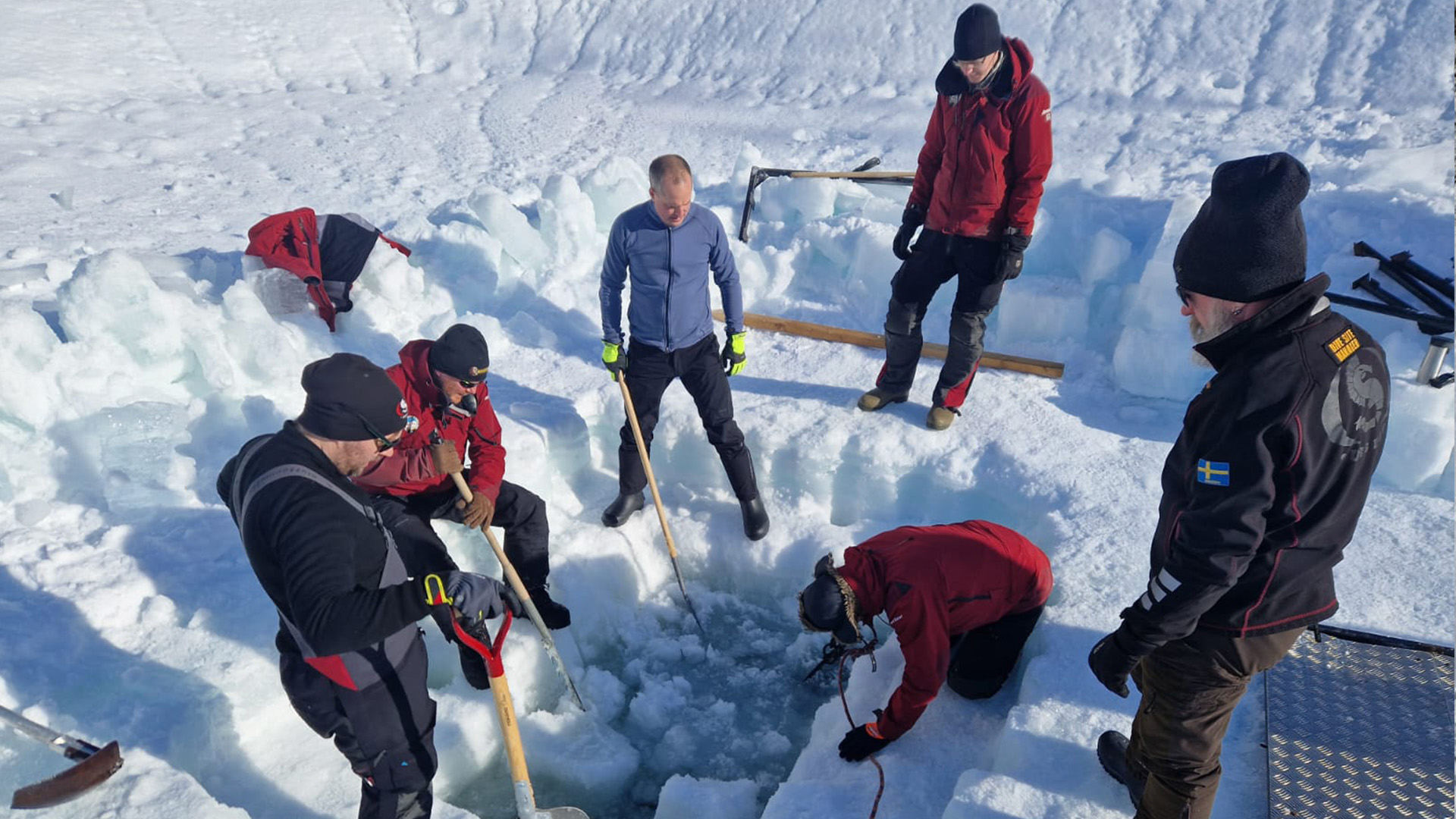
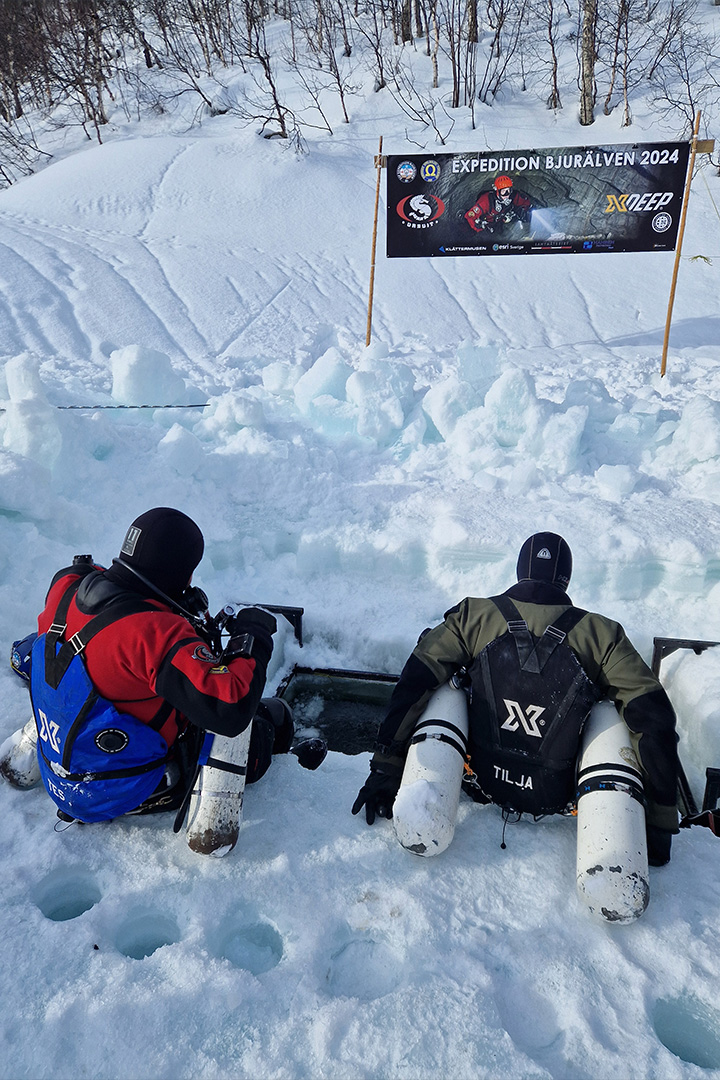
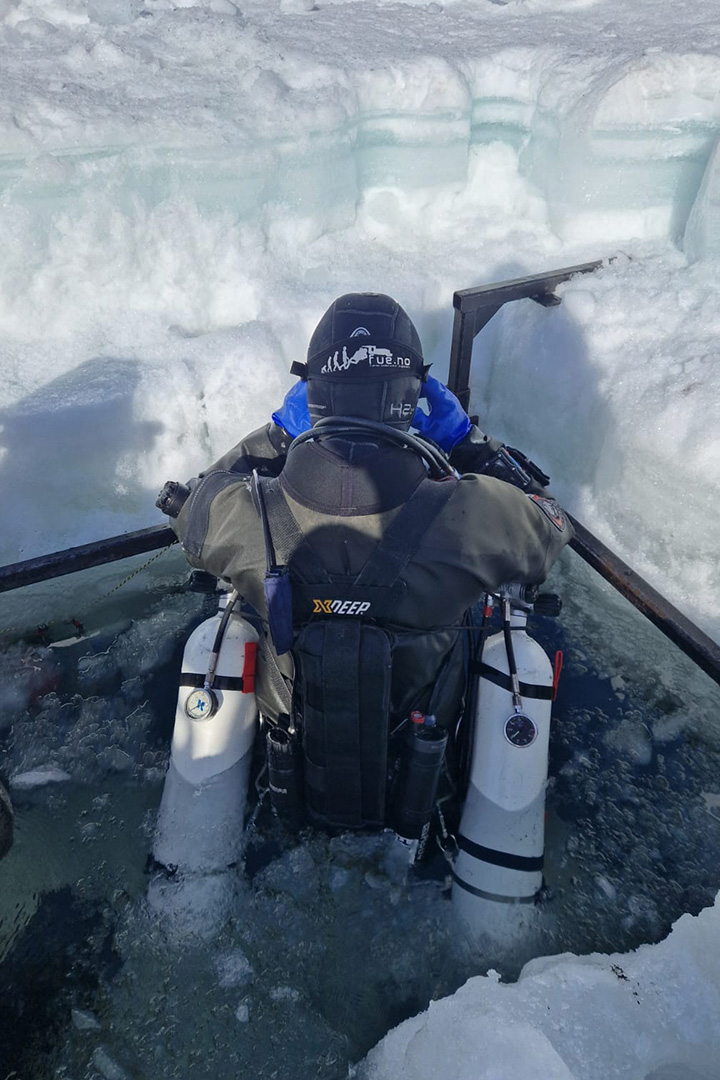
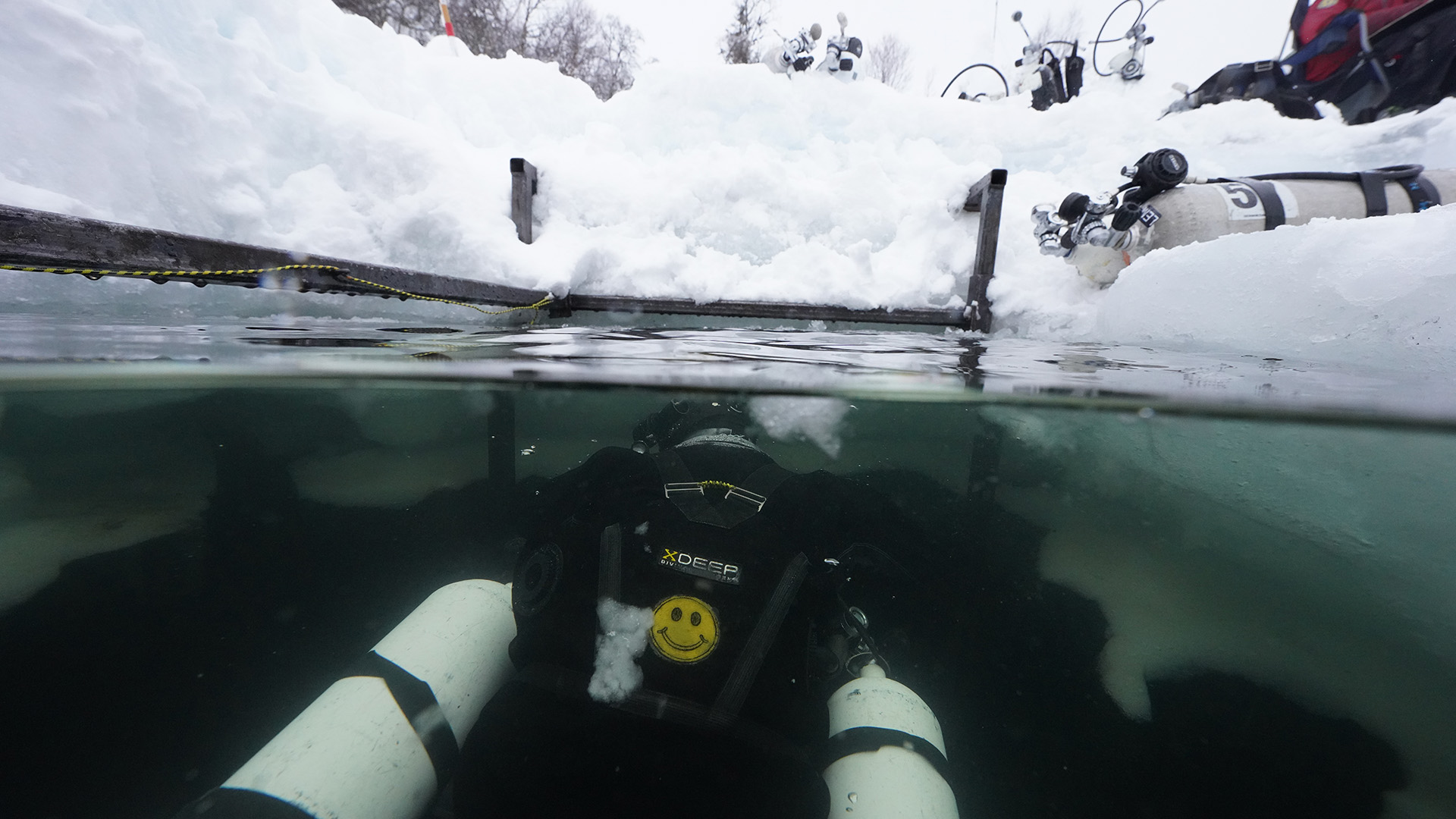
This year, team progress was stalled by the unusual amount of ice on the Dolin Lake. A meter of ice covering the cave entrance is normal and one and a half meters was also encountered previously. This year there were almost two meters of solid ice to get to free water, which took its toll on people and gear. When divers could get into the water, the mission was completed, and one team of three divers reached the end of the line during a 6-hour dive. Next year, the plan is to send in several teams and look for leads.
Another point of opening up the Dolinsjö cave was the new way of documenting exploration was attempted in 2024. Anders Etander, the new member of the expedition, has brought with him extensive expertise in a technique called photogrammetry. In photogrammetry, a large number (thousands) of images are taken in all directions while swimming through a cave passage. These images are then connected and fused into a complete 3D cave image. It is possible to navigate through this 3D image, which provides a feeling of swimming in the mapped cave passage. Work on creating a photogrammetry of the cave started this year and will continue for several years.
This year our progress was somewhat stalled by the unusual amount of ice on the Dolin Lake. We are used to a meter of ice covering the cave entrance and one and a half meters was also encountered previously. This year we had to get through almost two meters of solid ice to get to free water, which took its toll on people and gear.
Dmitri Gorski, Explorer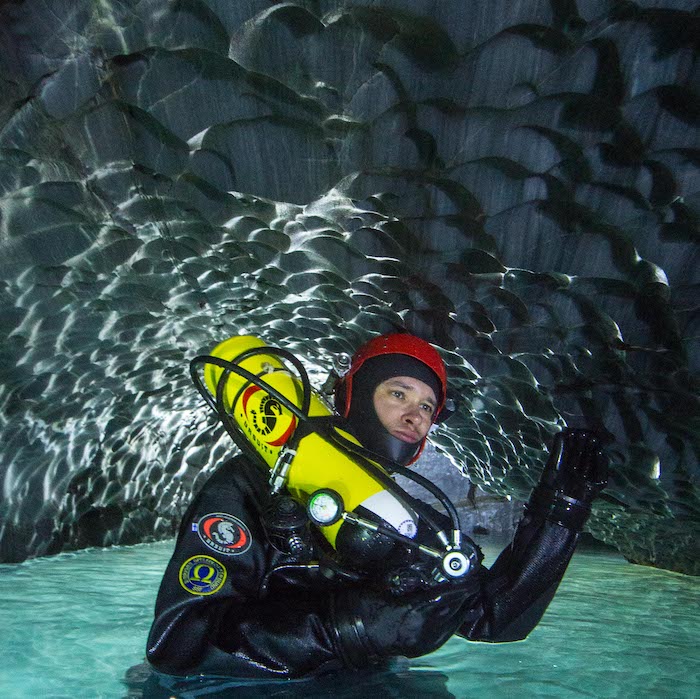
03.2024
To explore two caves in the Bjurälven valley: Meander Cave and Dolinsjö Cave. To create a complete 3D image of Dolinsjö Cave, thus enhancing the documentation process and providing a navigable 3D map of the cave. To document the progress of exploration through techniques such as photogrammetry, contributing to a comprehensive understanding of the cave systems in the Bjurälven valley.

It's your contribution!
By choosing the brands involved in our program for your personal diving, you directly contribute to the support we can provide to ESP divers around the world. Every little bit counts towards reaching our goals.
Thank you!
How to apply?
Share your vision with us. We want to support adventures, explorations, and projects that deepen the understanding of the underwater world.